Vintage Composition Notebook Covers KDP Review
As a designer who spends half my life staring at digitized files and the other half wrestling with thread tension, I approach new assets with a healthy dose of skepticism. When I first encountered the Vintage Composition Notebook Covers KDP bundle, my initial reaction was one of curiosity mixed with caution. The product description highlights its primary use for Amazon KDP low-content books, formatted in Canva for standard 7.5 x 9 inch covers. However, my mind immediately went to the tactile world of embroidery. Could these graphic Print Templates translate effectively into a machine embroidery design for physical goods? After mentally stress-testing this concept against real-world production scenarios, I have some practical insights to share for fellow crafters and small business owners.
The Aesthetic Potential: From Screen to Stitch
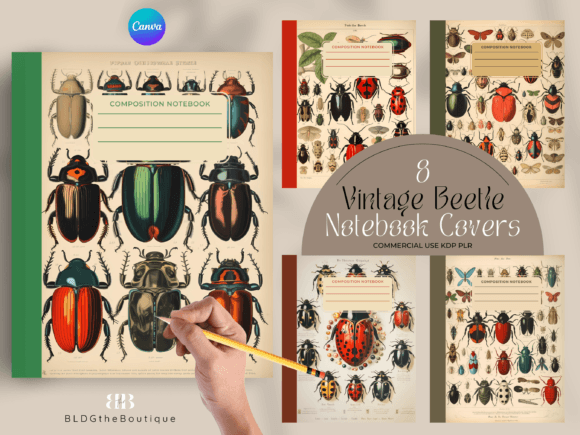
The visual personality of this collection is undeniably charming. Featuring eight distinct vintage ladybug beetle motifs, the designs evoke a sense of nostalgic academia mixed with whimsical nature themes. For an embroidery project, this mood is gold. It speaks directly to the current market trend of "cottagecore" and retro-school aesthetics. When you look at these Graphics, you aren't just seeing a cover; you are seeing a potential embroidered patch for a denim jacket or a central motif for a canvas tote bag design.
The layout of these covers suggests a strong central focal point—the ladybug beetle—which is ideal for embroidery. In digitizing terms, a clear subject means we can prioritize stitch clarity. The vintage style implies a certain roughness or texture that actually works in our favor; perfect, laser-sharp lines aren't always necessary when aiming for a worn-in, classic look. This makes the transition from a digital embroidery file to a finished product slightly more forgiving on textured fabrics like linen or heavy cotton twill.
Real-World Application: A Case Study
To truly evaluate the viability of using Vintage Composition Notebook Covers KDP assets for embroidery, let's walk through a specific scenario. Imagine a client runs a boutique shop selling personalized back-to-school gear. They want to expand beyond standard names on backpacks and offer something unique. They commission a limited run of canvas aprons for a local pottery studio, wanting a design that feels artistic yet durable.
In this context, adapting one of the ladybug beetle covers becomes a strategic move. You would take the graphic element, simplify it for stitching, and apply it as a large chest emblem on the apron. The vintage aesthetic aligns perfectly with the handmade nature of pottery. Customers walking into that studio would see the handmade product and immediately associate it with quality and creativity. The design acts as a brand stamp. If executed well with a dense fill stitch for the beetle's shell and a crisp satin stitch for the outlines, the perceived value of that apron skyrockets compared to a plain utility garment.
This same logic applies to sweatshirt embroidery. A oversized crewneck featuring a large, detailed beetle motif derived from these covers could be a standout item for an Etsy seller during the autumn season. It moves the needle from generic apparel to a statement piece. The key here is recognizing that while the source material is intended for book covers, the artistic DNA of the image is versatile enough for custom apparel and home decor.
Technical Considerations and Fabric Challenges
However, enthusiasm must be tempered with technical reality. Since Vintage Composition Notebook Covers KDP are originally designed as flat print layouts, they were not born as digital embroidery files. This distinction is critical. If you plan to use these images as a reference for creating your own stitches, or if you find a converted version, you must pay close attention to stitch density.
Vintage illustrations often contain fine details and subtle shading. In embroidery, trying to replicate every tiny line with a running stitch on a stretchy fabric is a recipe for disaster. On a textured fabric like a waffle knit or a looped towel, small details will get lost. Therefore, these designs are best suited for stable, woven materials. Think heavy canvas for tote bags, denim for patches, or tight-weave cotton for kitchen towel projects.
You also need to be wary of hoop size limitations. The original graphics are formatted for 7.5 x 9 inch covers. To capture the full essence of the composition notebook style, you might need a large hoop. If you attempt to shrink the design to fit a standard 4x4 hoop for a baby onesie, you risk losing the intricate details of the beetle's wings or the vintage typography elements often found on these covers. Tiny lettering and dense corners can cause bird nests and thread breaks if the scale isn't right.
Furthermore, consider the background. These covers often feature marble patterns or solid dark colors typical of composition books. If you are stitching onto a dark fabric, you must ensure your thread colors provide enough contrast. A black beetle on a navy sweatshirt will vanish. You may need to adapt the color palette, perhaps using metallic gold or cream threads to make the vintage motif pop against darker backgrounds.
Enhancing Brand Value and Customer Trust
Using distinctive assets like Vintage Composition Notebook Covers KDP can significantly impact your brand consistency. In a saturated market of small shop products, having a cohesive visual theme helps buyers recognize your work. If you build a collection around this vintage academic theme—offering matching pillow covers, aprons, and patches—you create a narrative. Customers aren't just buying an item; they are buying into a lifestyle.
This approach boosts customer trust. It shows that you put thought into the design selection rather than just slapping a generic clipart on a blank. For holiday gifts or wedding gifts, this level of curation makes the item feel more special and giftable. The professional presentation of a well-executed embroidery project based on high-quality source art reflects directly on your professionalism as a maker.
Practical Notes for the Embroidery Designer
Before committing to a full production run, there are several steps you must take to ensure success. First and foremost, test the design on scrap fabric that matches your final material. Do not skip this step. Check how the stabilizer interacts with the fabric; a cut-away stabilizer is likely necessary for these larger, detailed designs to prevent distortion over time.
Review the stitch density carefully. If you are digitizing this yourself from the graphic, avoid over-saturating the beetle's shell with too many layers of fill, which can make the fabric stiff and pucker. Conversely, ensure there is enough coverage so the fabric doesn't show through. Inspect small details closely; sometimes simplifying a complex vintage illustration yields a cleaner, more modern embroidered look.
It is also wise to test your design in black and white mockups. This helps you verify that the contrast holds up even without color, ensuring the shape remains recognizable. Compare how the design looks on both light and dark fabric backgrounds to gauge versatility.
Finally, and perhaps most importantly, confirm the licensing terms. The product description states these are for selling low-content books on Amazon KDP. It does not explicitly grant rights for physical merchandise or commercial embroidery sales. As a responsible craft business owner, you must contact the creator or read the full license agreement before selling finished products or using these as design assets for client work. Using a template outside its intended license can lead to serious legal issues. Always verify if the license extends to physical goods or if you need to purchase an extended commercial license.
In conclusion, while Vintage Composition Notebook Covers KDP are marketed for print, their aesthetic value offers a tantalizing opportunity for the creative embroiderer. With careful adaptation, respect for fabric limitations, and strict adherence to licensing, these vintage beetles can crawl off the page and onto some truly remarkable handmade creations.